
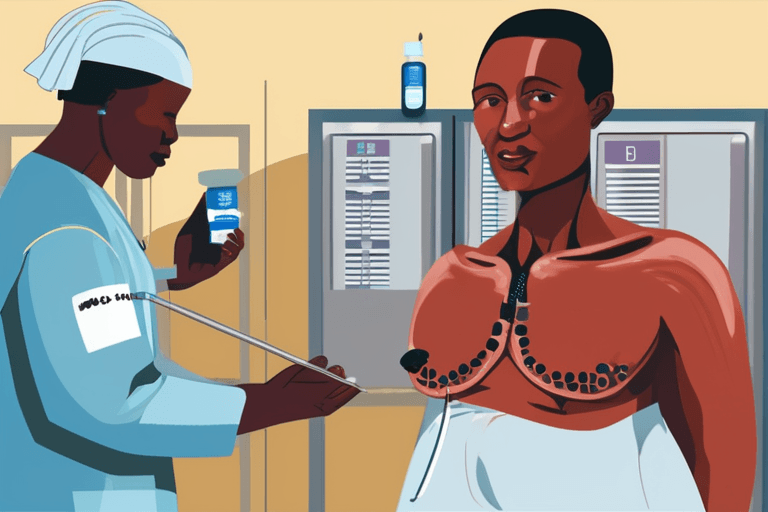
The Trump administration has announced plans to fund a $1.6 million study on hepatitis B vaccination of newborns in Guinea-Bissau, a west African country where nearly one in five adults live with the virus. The move has been met with widespread criticism from researchers, who have labeled the study "highly unethical" and "extremely risky." The decision comes after the US Centers for Disease Control and Prevention (CDC) changed its recommendations on hepatitis B vaccines at birth, stating that the shots are an individual decision despite decades of safe and effective vaccination with no evidence of harm.
According to Dr. Maria Rodriguez, a leading expert on global health, "This study is a clear example of neocolonialism, where wealthy countries impose their will on poorer nations without regard for their needs or concerns." She added, "The people of Guinea-Bissau are not guinea pigs for American researchers to experiment on."
The CDC's change in recommendations was part of a broader shift in childhood immunization policies under the Trump administration, led by US Health Secretary Robert F. Kennedy Jr. The new guidelines have sparked controversy, with many experts expressing concerns about the potential risks to public health.
In Guinea-Bissau, hepatitis B is a major public health concern, with an estimated 18% of adults living with the virus. The country has limited resources and infrastructure to combat the disease, making it even more challenging to implement effective vaccination programs. According to Dr. Amadou Ba, a local health expert, "We need more support and resources to fight this disease, not more experiments that could put our people at risk."
The study's funding was allocated by the Trump administration, which has been criticized for its handling of global health issues. The move has also sparked concerns about the potential impact on global vaccination efforts, particularly in low-income countries that rely heavily on international aid.
The study is expected to begin in the coming months, with researchers planning to vaccinate over 1.6 million newborns in Guinea-Bissau. However, the project's future remains uncertain, with many experts calling for its cancellation due to concerns about its ethics and potential risks.
As the debate surrounding the study continues, global health experts are urging caution and calling for a more collaborative approach to addressing hepatitis B and other public health concerns. According to Dr. Rodriguez, "We need to work together to find solutions that benefit all countries, not just a select few."
Multi-Source Journalism
This article synthesizes reporting from multiple credible news sources to provide comprehensive, balanced coverage.
Share & Engage
AI Analysis
Get instant insights & analysis
More Stories
Discover more articles
No recommended articles
Check back later for more stories
Discussion
Join 0 others in the conversation
Share Your Thoughts
Your voice matters in this discussion
Login to join the conversation
No comments yet
Be the first to share your thoughts!