
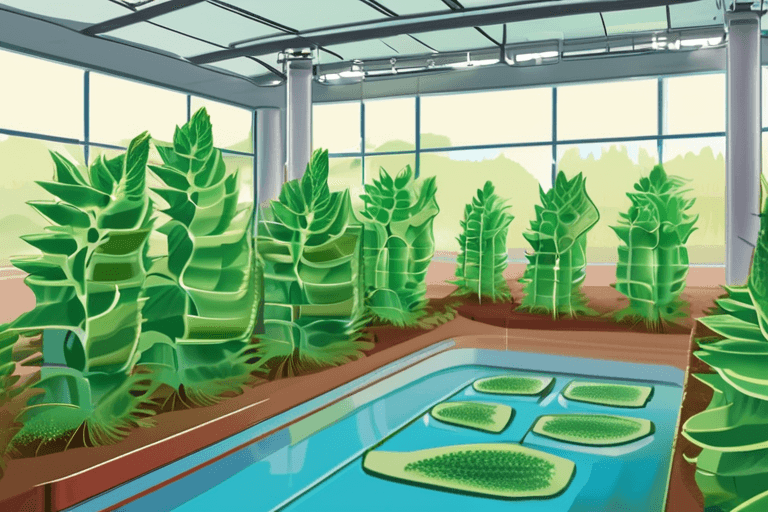
Scientists at the Okinawa Institute of Science and Technology (OIST) Graduate University have made a groundbreaking discovery about a plant species that has been thriving for 100 million years without photosynthesis. The plant, known as Balanophora, has abandoned its ability to produce its own food through photosynthesis and instead lives as a parasite on tree roots, hidden in dark forest undergrowth.
According to Petra Svetlikova, a researcher at OIST, the plant's cellular machinery has shrunk significantly, but not disappeared, allowing it to survive in its unique environment. "We were surprised to find that despite the significant reduction in its genome, the plant's cellular machinery is still functional," Svetlikova said. "This is a remarkable example of evolutionary adaptation, where the plant has found a way to survive and even thrive in a environment that would be hostile to most other plants."
The researchers surveyed rare populations of Balanophora across East Asian islands, including Taiwan and mainland Japan, and found that some island species have even developed the ability to reproduce without sex, cloning themselves to colonize new habitats. This unique reproductive strategy is similar to that of parasites like malaria, which also reproduce asexually.
Balanophora's ability to survive for 100 million years without photosynthesis is a testament to its remarkable adaptability. However, the plant's reliance on tree roots for sustenance makes it highly vulnerable to habitat loss. As forests are cleared for development and agriculture, Balanophora populations are at risk of disappearing.
The discovery of Balanophora's unique survival strategy has significant implications for our understanding of plant evolution and adaptation. "This plant is a fascinating example of how organisms can adapt to their environment in ways that were previously thought to be impossible," said Dr. Takeshi Kawahara, a plant biologist at OIST. "It challenges our current understanding of plant evolution and highlights the importance of continued research into the diversity of plant life."
The researchers plan to continue studying Balanophora and its unique characteristics, with the goal of gaining a deeper understanding of its evolutionary history and the mechanisms that have allowed it to thrive for so long. As the plant's populations continue to decline due to habitat loss, the researchers hope to use their findings to inform conservation efforts and protect this remarkable species for future generations.
In a related development, the OIST researchers have made their findings available online, providing a detailed account of their research and the discovery of Balanophora's unique survival strategy. The study has been published in a leading scientific journal and is available for download by the public.
Multi-Source Journalism
This article synthesizes reporting from multiple credible news sources to provide comprehensive, balanced coverage.
Share & Engage
AI Analysis
Get instant insights & analysis
More Stories
Discover more articles
No recommended articles
Check back later for more stories
Discussion
Join 0 others in the conversation
Share Your Thoughts
Your voice matters in this discussion
Login to join the conversation
No comments yet
Be the first to share your thoughts!