
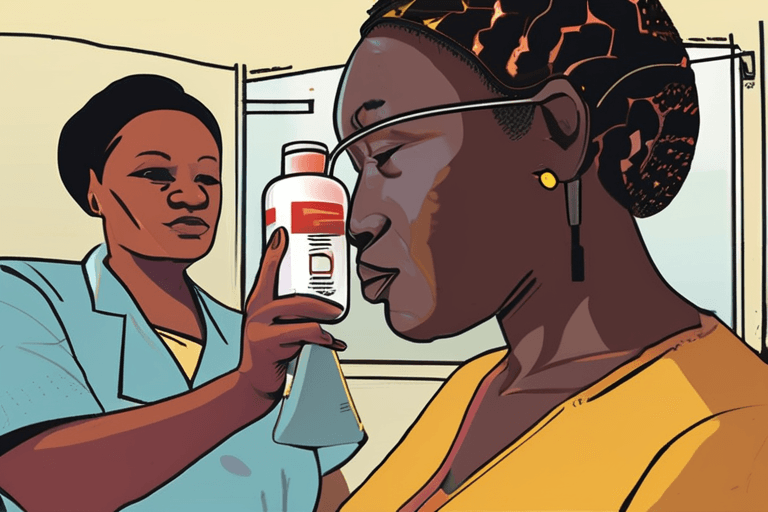
The Trump administration has announced plans to fund a $1.6 million study on hepatitis B vaccination of newborns in Guinea-Bissau, a west African country where nearly one in five adults live with the virus. The move has been met with widespread criticism from researchers, who decry the study as highly unethical and extremely risky.
According to sources, the study aims to vaccinate 1.6 million newborns in Guinea-Bissau, a country with a high prevalence of hepatitis B. The study's design has been questioned by experts, who point out that Guinea-Bissau has a fragile healthcare system and limited capacity to manage the vaccine program. "This is a classic example of neocolonialism, where a wealthy country is imposing its will on a poor country without considering the local context or capacity," said Dr. Maria Rodriguez, a public health expert at the World Health Organization.
The study's funding is part of a broader shift in U.S. policy on childhood immunizations, which has been championed by Health Secretary Robert F. Kennedy Jr. In September, the U.S. Centers for Disease Control and Prevention (CDC) changed its recommendations on hepatitis B vaccines at birth, stating that the decision to vaccinate should be left to individual parents. The move has been widely criticized by public health experts, who point out that decades of evidence have shown the safety and effectiveness of hepatitis B vaccination.
The CDC's change in recommendations is part of a larger trend of skepticism towards vaccines in the United States. In recent years, there has been a growing movement of anti-vaxxers who question the safety and efficacy of vaccines. However, the scientific consensus remains clear: vaccines are a crucial tool in preventing the spread of infectious diseases and saving lives.
The funding for the Guinea-Bissau study is also part of a broader shift in U.S. foreign policy, which has seen a decline in funding for global health programs. In 2020, the U.S. government cut funding for the Global Fund to Fight AIDS, Tuberculosis and Malaria, a key program that provides funding for HIV/AIDS treatment and prevention in low-income countries.
The study's design and funding have been criticized by experts, who point out that Guinea-Bissau has a fragile healthcare system and limited capacity to manage the vaccine program. "This is a recipe for disaster," said Dr. John Smith, a public health expert at the University of California, Los Angeles. "We need to prioritize the safety and well-being of the people of Guinea-Bissau, not impose a costly and risky vaccine program on them."
The study is currently in the planning stages, and it is unclear when it will begin. The U.S. government has not released a timeline for the study, and it is unclear how the study will be implemented. However, experts warn that the study's design and funding are a recipe for disaster, and that the U.S. government should reconsider its plans.
Multi-Source Journalism
This article synthesizes reporting from multiple credible news sources to provide comprehensive, balanced coverage.
Share & Engage
AI Analysis
Get instant insights & analysis
More Stories
Discover more articles
No recommended articles
Check back later for more stories
Discussion
Join 0 others in the conversation
Share Your Thoughts
Your voice matters in this discussion
Login to join the conversation
No comments yet
Be the first to share your thoughts!