
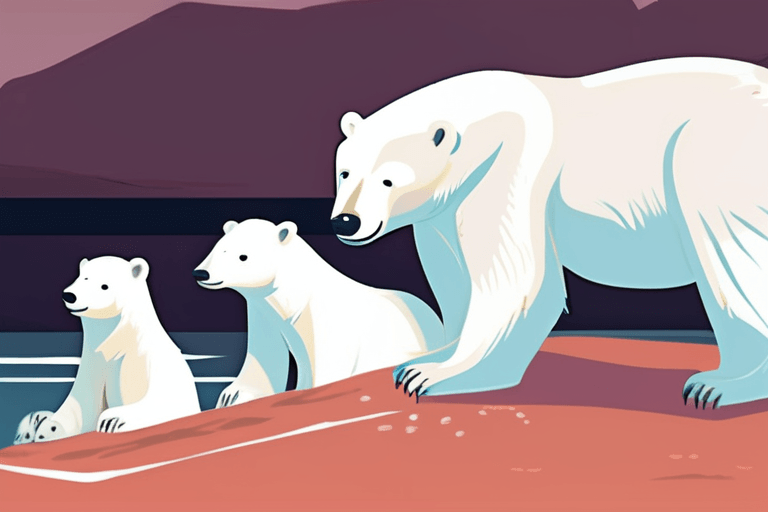
Scientists in Canada have documented a rare case of female polar bear adoption, highlighting the complex relationships among the apex Arctic predators. Researchers tracking a bear known as X33991 noticed she had gained a second cub who likely needed help. The discovery was made by Polar Bears International, a non-profit conservation group, when they first placed a GPS collar on the female polar bear in the spring, revealing she had one young cub. However, when she was spotted with two cubs of roughly the same age last month, they realized they were witnessing an exceedingly rare case of adoption.
According to Evan Richardson, a research scientist with Environment and Climate Change Canada, female polar bears are "really good moms" and are "primed for looking after and caring for their offspring." Richardson explained that the female polar bears' behavior is likely driven by their natural instinct to care for vulnerable cubs. "We think if there's a little cub that's bawling on the coast and has lost its mother, these females just can't help themselves but to take them on and look after them," Richardson said. "It's a really curious behavior and a testament to the strength and resilience of these incredible animals."
The adoption is a rare occurrence, as female polar bears typically only care for their own cubs. However, in cases where a cub is orphaned or separated from its mother, other females may take on a nurturing role. Richardson noted that this behavior is not unique to polar bears, as other species of bears have also been observed adopting orphaned cubs.
The discovery of the adopted cub highlights the importance of conservation efforts in protecting polar bears and their habitats. Climate change is a significant threat to polar bears, as melting sea ice reduces their access to food and habitat. Polar Bears International and other conservation groups are working to raise awareness about the impact of climate change on polar bears and to support research and conservation efforts.
The current status of the adopted cub and its mother is not immediately clear, but researchers will continue to monitor their movements and behavior. The discovery of this rare case of adoption highlights the complex and fascinating social dynamics of polar bears and underscores the importance of continued research and conservation efforts.
Multi-Source Journalism
This article synthesizes reporting from multiple credible news sources to provide comprehensive, balanced coverage.
Share & Engage
AI Analysis
Get instant insights & analysis
More Stories
Discover more articles
No recommended articles
Check back later for more stories
Discussion
Join 0 others in the conversation
Share Your Thoughts
Your voice matters in this discussion
Login to join the conversation
No comments yet
Be the first to share your thoughts!