
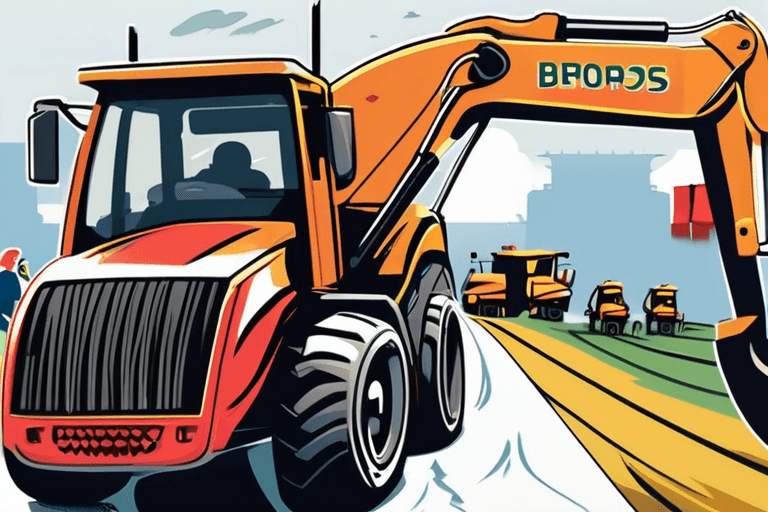
Hundreds of tractors clogged the streets of Brussels as farmers converged on the Belgian capital to protest against the contentious trade agreement between the European Union and South American nations. The demonstrations erupted on Thursday as EU leaders gathered for a summit where the fate of the Mercosur deal hung in the balance. More than 150 tractors blocked central Brussels, with an estimated 10,000 protesters expected in the European quarter, according to farm lobby Copa-Cogeca.
Farmers, dressed in their finest overalls and caps, stood united in their opposition to the deal, which they claim will destroy their livelihoods by flooding the EU market with cheap South American beef and soy. "This deal is a death sentence for European farmers," said Jean-Pierre Mercier, a French farmer and president of Copa-Cogeca. "We will not stand idly by while our industry is dismantled by bureaucrats in Brussels."
The protests were not limited to the streets, as farmers also brought their message to the doorstep of the European Parliament. A farmer threw a potato near the parliament building at the Place du Luxembourg, a symbolic gesture that highlighted the potential impact of the deal on EU agriculture. The potato, a staple crop in many European countries, was a poignant reminder of the livelihoods that are at risk.
The Mercosur deal, which has been in the works for over a decade, aims to create a free trade zone between the EU and South American nations. However, farmers have long been opposed to the deal, citing concerns over the impact on EU agriculture and the potential loss of jobs. The protests on Thursday were the latest in a series of demonstrations against the deal, which have been ongoing for months.
Industry insiders say that the protests are not just about the Mercosur deal, but also about the broader issues facing EU agriculture. "The EU's agricultural policy is in crisis," said a spokesperson for the European Farmers' Association. "We need a policy that supports European farmers, not one that destroys them."
The EU summit, which was scheduled to discuss the fate of the Mercosur deal, was thrown into chaos by the protests. EU leaders were forced to navigate the blocked streets, while also trying to find a solution to the crisis. The current status of the deal is uncertain, with EU leaders set to meet again in the coming weeks to discuss the issue.
As the protests continue, farmers remain resolute in their opposition to the deal. "We will not back down," said Mercier. "We will fight for our livelihoods and for the future of European agriculture." The outcome of the protests and the fate of the Mercosur deal remain uncertain, but one thing is clear: the future of EU agriculture hangs in the balance.
Multi-Source Journalism
This article synthesizes reporting from multiple credible news sources to provide comprehensive, balanced coverage.
Share & Engage
AI Analysis
Get instant insights & analysis
More Stories
Discover more articles
No recommended articles
Check back later for more stories
Discussion
Join 0 others in the conversation
Share Your Thoughts
Your voice matters in this discussion
Login to join the conversation
No comments yet
Be the first to share your thoughts!